How to Choose a Casino Route in Rain
Choose a rainy casino route by comparing shelter, crossings and access, so you can make a clear plan for wet conditions and changing arrivals.
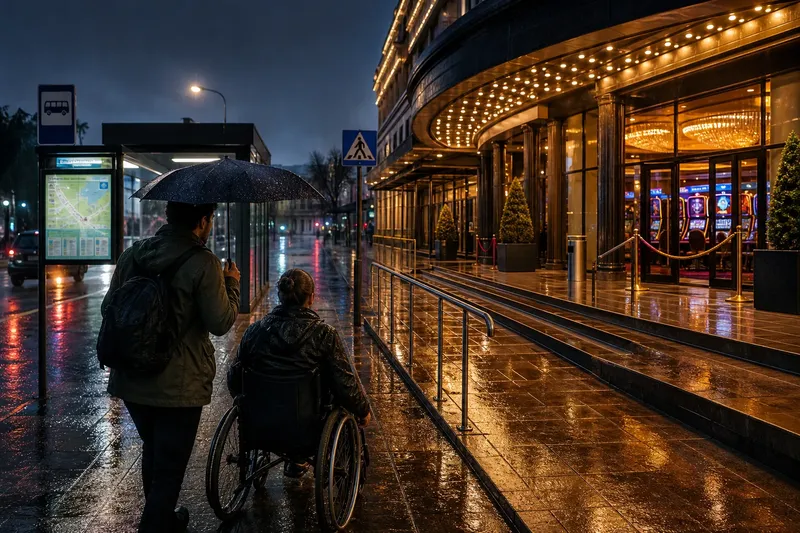
Which casino route will still work when rain collects on pavements and slows your group? A rainy casino route is best chosen by comparing crossings, covered sections and places to wait—not by distance alone. Start with the route options shown for your actual arrival point.
Think of shelter like an umbrella: it helps only where it covers you. A route with a covered stretch may still involve a difficult kerb, a puddled approach or a pause in the rain, so check the whole journey from stop, car park or drop-off point to the venue.
Compare how rain affects each part of the journey
Use a map to identify possible walking routes, then check venue directions and local signs for the approach visitors are meant to use. Compare the details that rain can change: exposed paving, places where water may collect, crossing points, kerbs and sheltered waiting spots.
- Check the crossing: If the route uses a marked pedestrian crossing, keep it in consideration; if it requires crossing elsewhere, choose a route with a recognised crossing instead.
- Check the walking surface: If the route appears to include uneven or slippery paving, look for a smoother public path; if none is clear, choose a familiar route and allow time to pause.
- Check for steps: If steps appear on the route and someone needs step-free access, choose a confirmed step-free approach; if access details are unclear, contact the venue before travelling.
- Check the shelter gaps: If a route has a long exposed stretch, compare it with an option that offers cover; if the covered option has uncertain access, use the clearer route and plan suitable wet-weather clothing.
- Check where water may collect: If the map or current conditions suggest a low or puddled section, choose a public alternative that avoids it; if no alternative is clear, pause and reassess rather than stepping into traffic or an unmarked area.
- Check the waiting place: If your group needs to regroup, identify a sheltered spot away from doorways and the walking line; if none is available, agree to meet at a clear, safe place without blocking others.
Check access needs before choosing the sheltered option
A covered route is not automatically the right route. Check the venue’s access information for the entrance and any step-free approach, especially if someone in your party uses a mobility aid or needs a particular arrangement. If the information does not answer your question, contact the venue before setting out.
Check the forecast near departure and carry only what you can manage while walking and opening doors. Keep travel details accessible, and choose clothing that suits the expected conditions. If weather or route information changes, reassess using current signs and directions rather than relying on an old plan.
Agree on how the group will handle a delay
Before leaving, name a meeting point that is sheltered, visible and clear of entrances and pedestrian flows. Make sure everyone knows the place and the plan if someone arrives first. If no sheltered spot is suitable, choose a safe visible alternative that does not obstruct other people.
For a solo visit, note the entrance and the route from it to your destination inside. If signs differ from what you expected, stop somewhere safe to check them rather than walking while distracted by your phone or wet belongings.
What should you do when rain changes the plan?
What if a puddle blocks the usual path?
Look for a signed public alternative that avoids the water without sending you across a vehicle area or onto an unmarked surface. If no suitable path is clear, pause somewhere safe and ask a companion or venue staff for directions.
What if the covered route has steps?
Check whether the venue lists a step-free approach that also suits your arrival point. If that information is unclear, contact the venue and choose only an option whose access arrangements you can confirm.
What if someone arrives separately?
Use the meeting point agreed before departure and send a short message naming it. If it becomes crowded or exposed, select a nearby place that is safe and clear of the entrance, then tell the group about the change.
What if the group cannot agree on a route?
Compare the routes against the group’s actual needs: crossings, surface, shelter and access. If one option is unsuitable for someone, do not treat speed or cover as a reason to press ahead; choose a confirmed alternative or change the plan.
Work through the choice with a concrete plan
Say you and a friend are travelling from a bus stop, and your friend uses a mobility aid. For this invented situation, your map lists Route A as a direct public pavement with one exposed section, while Route B offers more cover but may include steps. Your starting quantities are one bus stop, two route options and one mobility aid; they describe this scenario, not a measured real-world journey.
First, use the venue’s access directions to check Route B for a step-free approach. If they confirm it is step-free, choose Route B and name a sheltered meeting point; the observable result is a route plan that includes both cover and confirmed access. If the directions do not confirm step-free access, contact the venue; if it remains uncertain, choose Route A only if its public path is suitable for your friend, or change the plan. The decision turns on verified access, not on which route looks more sheltered.
When choosing a rainy casino route, give priority to a suitable crossing, manageable surface and confirmed access, then use shelter to refine the choice. A clear meeting point and a plan for changing conditions can make the arrival easier to coordinate without sending anyone onto an unsuitable path.